


-
Omega-3 supplements vary widely in purity, freshness, and potency, so two bottles can deliver very different quality, even from the same brand.
-
A quick smell test can help you detect rancid fish oil before you take your next dose.
-
The most reliable proof of quality is a third-party Certificate of Analysis (COA); if a brand won’t share one, treat that as a red flag.
-
This guide shows you how to evaluate your omega-3 using three checks: purity (contaminants), freshness (oxidation), and potency (EPA + DHA content).
You already have your omega-3 sitting in the cabinet. You’ve decided to take it, but something feels off.
Maybe it smells stronger than you expected. Maybe you read something about mercury in fish oil. Or maybe you’re wondering if the label is actually telling the truth. That hesitation is valid, and it’s more common than you think.
You might be asking yourself:
-
“My fish oil smells fishy, is that normal, or is it bad?”
-
“How do I know if there’s mercury in this?”
-
“Am I even getting what the label says I am?”
These are not minor concerns. They’re exactly the questions you should be asking before continuing any supplement.
The good news is that you can check omega-3 quality yourself. This article walks you through three ways to evaluate what you already own: purity (contaminant testing), freshness (oxidation), and potency (EPA + DHA delivery).
Why Omega-3 Quality Varies More Than You Think
Omega-3 supplements vary in quality because there is no required pre-market testing for purity, freshness, or potency. Standards from groups like GOED, IFOS, and USP exist, but brands choose whether to follow them.
Several factors drive these differences:
-
No mandatory pre-market testing: Fish oil supplements can be sold without the strict verification required for pharmaceuticals. Industry standards are voluntary, which allows wide variation in quality.
-
Fish source and species: Smaller fish like anchovies, sardines, and mackerel tend to carry fewer heavy metals than larger fish like tuna or cod. The same “fish oil” label can represent very different sources.
-
Processing method: Molecular distillation removes heavy metals and PCBs, but it increases production cost. You can’t confirm this step from the label. Only a Certificate of Analysis (COA) shows it.
-
Storage and oxidation: Fish oil degrades when exposed to heat, light, or air. This can happen during manufacturing, shipping, or at home. A product can start fresh and still go rancid over time.
-
Omega-3 form stability: Ethyl ester (EE) forms are more prone to oxidation, while triglyceride (TG) and re-esterified TG (rTG) forms tend to be more stable.
The good news is that all three of these variables, purity, freshness, and potency, leave verifiable traces. Here’s how to find them.

How to Tell If Your Omega-3 Is Pure (Free from Contaminants)
Purity means your omega-3 has been tested and confirmed to contain heavy metals, PCBs, and dioxins below accepted safety limits. The only reliable way to verify this is through a Certificate of Analysis (COA) from an accredited third-party laboratory.
Several contaminants matter when evaluating fish oil quality:
-
Mercury (methylmercury): The most recognized risk in fish-based products. It builds up in larger fish over time. Many omega-3 supplements use smaller fish like anchovies or sardines, which carry a lower risk, but should still be verified.
-
Lead, cadmium, arsenic: These heavy metals can enter fish through polluted water. A proper COA should show all three below the established safety thresholds.
-
PCBs (polychlorinated biphenyls): Persistent industrial chemicals that accumulate in fatty fish tissue. Molecular distillation is commonly used to remove them.
-
Dioxins and furans: Closely related to PCBs. These are less often discussed but are included in stricter third-party testing programs like IFOS.
To interpret a COA correctly, you need to know what “safe” actually looks like. These are the industry benchmarks used by GOED and IFOS:
|
Contaminant |
GOED Standard |
IFOS 5-Star Limit |
Plain Language |
|
Mercury (total) |
< 0.10 ppm |
< 0.10 ppm |
Stricter than FDA seafood limit |
|
Lead |
< 0.10 ppm |
< 0.10 ppm |
Well below CA Prop 65 trigger |
|
Cadmium |
< 0.10 ppm |
< 0.10 ppm |
Kidney toxin; low tolerance |
|
Arsenic (inorganic) |
< 0.10 ppm |
< 0.10 ppm |
Inorganic form is carcinogenic |
|
PCBs (total) |
< 0.09 ppm |
< 0.045 ppm |
IFOS is twice as strict as GOED |
|
Dioxins + Furans |
< 2 pg TEQ/g |
< 2 pg TEQ/g |
WHO-based toxicity equivalent |
Here’s how to verify purity in practice:
-
Find the COA: Reputable brands publish batch-specific COAs on their website. If you can’t locate one, request it. If the brand avoids sharing it, that’s a warning sign.
-
Check the testing lab: The COA should come from an independent lab such as Eurofins or Covance. Results generated in-house are not independent verification.
-
Look for “molecularly distilled”: This suggests the oil went through a purification process that removes contaminants. It’s a positive signal, but it does not replace actual test results.
-
Don’t rely on “wild-caught”: Wild sourcing does not guarantee purity. Fish absorb pollutants from their environment, so testing (not sourcing claims) determines safety.
→ A COA from an accredited third-party lab is the only document that proves what’s actually in your supplement, not what’s claimed on the label.
How to Tell If Your Omega-3 Is Fresh (Not Rancid)
The fastest way to check freshness is the smell test. Fresh fish oil has a mild, faintly oceanic scent. If it smells sharp, sour, strongly fishy, or like used cooking oil, it has likely oxidized and should not be used.
At-Home Sensory Test (Pass/Fail Guide)
-
Smell: Open a capsule or bottle.
Fresh: mild, slightly oceanic
Rancid: sharp, sour, pungent, or stale oil smell
A light fishy scent is normal. A harsh or sour odor is not. -
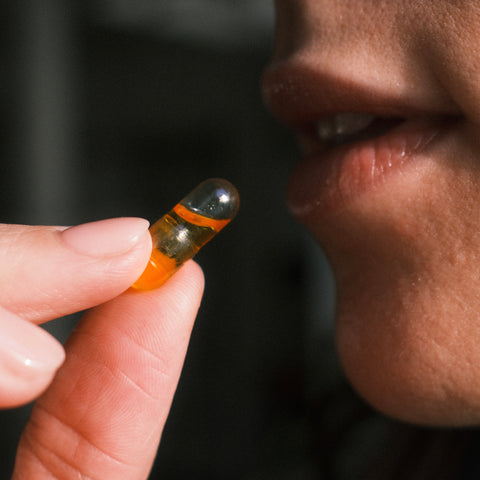
Color: Look at the oil under the light.
Fresh: pale yellow to light golden
Rancid: dark yellow, amber, or brown -
Taste (optional): If you’re comfortable, taste a small amount.
Fresh: mild or slightly fishy
Rancid: bitter, sour, or metallic
Some people use the “freeze test” to judge quality, but this method is unreliable. Fish oil naturally becomes cloudy or solid when cold, regardless of purity or freshness. It does not tell you whether the oil is good or degraded.
Freshness matters because oxidation changes the structure of omega-3 fats. When oil turns rancid, it may no longer provide the intended benefits and may work against them. Taking oxidized oil defeats the purpose of supplementing in the first place.
You can also verify freshness through lab data. A COA may include oxidation markers such as TOTOX, peroxide value (PV), and anisidine value (AV).
These numbers reflect how much the oil has degraded over time, both in early-stage and advanced oxidation.
To help preserve freshness once you open your bottle:
-
Refrigerate after opening, especially for liquid fish oil.
-
Keep it away from heat and direct sunlight.
-
Close the bottle tightly after each use to limit air exposure.
-
Avoid buying more than you can finish before the expiration date.
-
Check the batch-specific TOTOX value on the COA when available, not just the printed expiry date.

How to Tell If Your Omega-3 Is Safe & Effective (Potency)
Potency means your supplement delivers the EPA and DHA listed on the label, in a form your body can use. Two products can show the same “fish oil” amount but provide very different levels of active omega-3.
Here’s how to check what you’re actually getting:
-
Ignore the front label “fish oil mg”: A 1,000 mg capsule often contains only about 300 mg of combined EPA + DHA. The total fish oil number does not reflect potency.
-
Check the Supplement Facts panel: Look for EPA and DHA listed separately with their mg values. Add them together. That total is your actual omega-3 dose per serving.
-
Confirm the serving size: Some products require multiple capsules to reach that dose. One capsule may contain 180 mg EPA and 120 mg DHA, but the serving size could be three capsules. Always check how many capsules equal one serving.
Potency is also tied to accuracy. Third-party certifications like IFOS, NSF, or USP help confirm that what’s on the label matches what’s in the capsule.
If you’re evaluating an omega-3 right now, this table summarizes the key indicators to check across all three quality dimensions:
|
Quality Pillar |
What to Look For |
Green Light |
Red Flag |
|
Purity |
Third-party COA; heavy metals, PCBs (< 0.09 ppm), and dioxins/furans below GOED thresholds |
COA available by lot number from accredited lab |
No COA; refuses to share; only internal testing |
|
Freshness |
TOTOX < 26; PV < 5 meq/kg; AV < 20; mild or neutral odor |
Fresh smell; TOTOX on COA within GOED limits |
Rancid or sharp smell; no oxidation data on COA |
|
Potency |
EPA + DHA listed separately on label; third-party verified accuracy |
IFOS, NSF, or USP certification; clear EPA+DHA breakdown |
Only “fish oil mg” listed; no EPA/DHA breakdown |
|
Form |
Omega-3 form (TG, rTG, EE) stated on label or COA |
Triglyceride (TG) or re-esterified TG (rTG) |
Ethyl ester only with no form listed |
|
Certification |
Named, verifiable third-party certification |
IFOS 5-star, NSF Certified for Sport, USP Verified |
No certification; vague “quality tested” claims |
Red Flags to Avoid When Evaluating Omega-3 Quality
These warning signs are easy to miss, but they can tell you a lot about the product you’re using:
-
Only “total fish oil mg” is listed on the label. Without separate EPA and DHA values, you can’t determine your actual omega-3 dose.
-
No COA available, or only internal testing. If a brand won’t provide a batch-specific Certificate of Analysis from an independent lab, there’s no way to verify its claims.
-
Strong, rancid, or overly fishy smell. A mild ocean scent is normal. A sharp, sour, or stale oil smell signals oxidation—stop using it.
-
No third-party certification. Lack of IFOS, NSF, or USP verification means no independent confirmation of purity or label accuracy.
-
Vague sourcing (“natural fish oil”). If the label doesn’t name the fish species or origin, you can’t assess contaminant risk or sourcing quality.
-
“Natural flavor” with no explanation. Flavoring can mask unpleasant odors, including rancidity. It’s not always an issue, but it deserves a closer look.
-
Unusually low price. Proper purification, testing, and sourcing cost money. A price far below similar certified products often signals compromises in quality.
-
Enteric coating is used as the main selling point. This coating reduces fishy burps but does not protect against oxidation or poor-quality oil.
A Product That Checks the Boxes — The Bioligent Standard
By now, you’ve seen how omega-3 quality comes down to three things: purity you can verify through contaminant testing, freshness you can assess through oxidation signals, and potency you can confirm through EPA and DHA content on the label. Each one is measurable, not assumed.
If you’re still deciding which omega-3 to use, or thinking about switching after running through the checklist above, here’s where Bioligent fits.
Bioligent’s omega-3 is provided in triglyceride (TG) form, which is known for better stability compared to ethyl ester forms. It is also third-party tested, with results available through a Certificate of Analysis, so you can verify both contaminant levels and oxidation markers directly.
This doesn’t replace doing your own checks. It simply aligns with the standards outlined in this guide: transparent testing, clearly defined form, and verifiable data behind the label.
If you want to confirm these standards for yourself, the COA is the best place to start.
Verify the Data Yourself
If you want to see how your omega-3 measures up, start with the Certificate of Analysis. You can review Bioligent’s COA by lot number and check the same markers covered in this guide (contaminants, oxidation, and EPA + DHA content) so you can make an informed decision based on actual data.